Start here
Health screening
We gather the pieces — from the outside and the inside — and lay them on the table.
Read about the screening →Functional health
Your lifestyle is all connected. Food, sleep, movement, energy and relationships affect one another.
We gather the pieces — from the outside and the inside — and find the root causes.
So it becomes your everyday life. Not a project.
Use the arrow keys to move between them.
Your history
5 of 12 pieces placed
What you've been through, and what you've already tried.
Your goals
It starts with you. What do you want more of — or less of — in your everyday life?
Your goal is the starting point. We find the pieces standing in the way, and make a plan you can live with.
The pieces
What you're feeling rarely has just one explanation.
That's why we gather pieces from your everyday life and from the body itself — and see how they fit together.
From the outside
From the inside · optional
Interpreted as guidance for your lifestyle choices.
Functional health
Functional health sees the body as one system.
The question isn't only whether your numbers are normal. It's this: what does it take for you to function at your best?
What do you want to achieve? Your goal sets the direction for everything else.
What you're feeling is a signal. Tests from the outside and the inside help us see what lies behind it.
A few changes at a time, in the right order.
Food and timing
It's not only about what you eat.
It's also about how clean and unprocessed it is, whether there's enough protein — and when in the day you eat.
No single diet suits everyone, and you won't be put in a box. We start with a one-week food log and find your rhythm from there.
Four questions about your food
Real food rather than products.
As unprocessed as possible.
And enough good-quality protein.
Your rhythm through the day.
Getting there
We check where you are, we plan, you live it, and we follow up — with your goal at the centre. Roughly every three weeks we go round again. Online or in person.
Start
The conversation
20 minutes, free. What do you want to achieve — and can we help?
Around your goal
Once it sticks
You can take it from here
The habits are yours — and you know what to come back to.

What it's all about
Not a quick fix. Not a project.
An everyday life that fits together — and that you can keep up yourself.
Here's one ordinary day. Flip it and see the difference.
A day in your life
Morning · Sleep
Up at the same time every day — daylight and a glass of water before coffee.
Breakfast · Food
A proper meal with good-quality protein.
Work · Movement
On your feet every hour — and a walk to the meeting.
Lunch · Food · relationships
Real food, away from the screen, with your colleagues.
Afternoon · Stress and joy
A planned break, water — and a walk home when you can.
Evening · Relationships
Dinner at the table — and time for the people who matter.
Night · Sleep
A screen-free last hour and a regular bedtime.
An illustrative day for a fictional person: habits and routines, not health results. You're seeing the day after.
The building blocks
You saw them all in the day above.
We explore them together, work out what matters most to you — and set goals you can work towards.
The KRAMSSS model and the wording in brackets were developed by Umahro Cadogan and are reproduced with credit. KRAM is a well-known Danish prevention model.
In Danish, kram means hug — so think of the seven foundations as a health hug. The letters stand for the Danish words Kost, Rygning, Alkohol, Motion, Søvn, Stress and Sociale relationer — diet, smoking, alcohol, exercise, sleep, stress and social relationships.
Start here
We gather the pieces — from the outside and the inside — and lay them on the table.
Read about the screening →Recommended
Round by round, roughly every three weeks — until it's part of your everyday life.
Read about the programme →One piece
One question — or a review of a test you've already taken.
Read about the consultation →For business
Talks, workshops and programmes, in English or Danish.
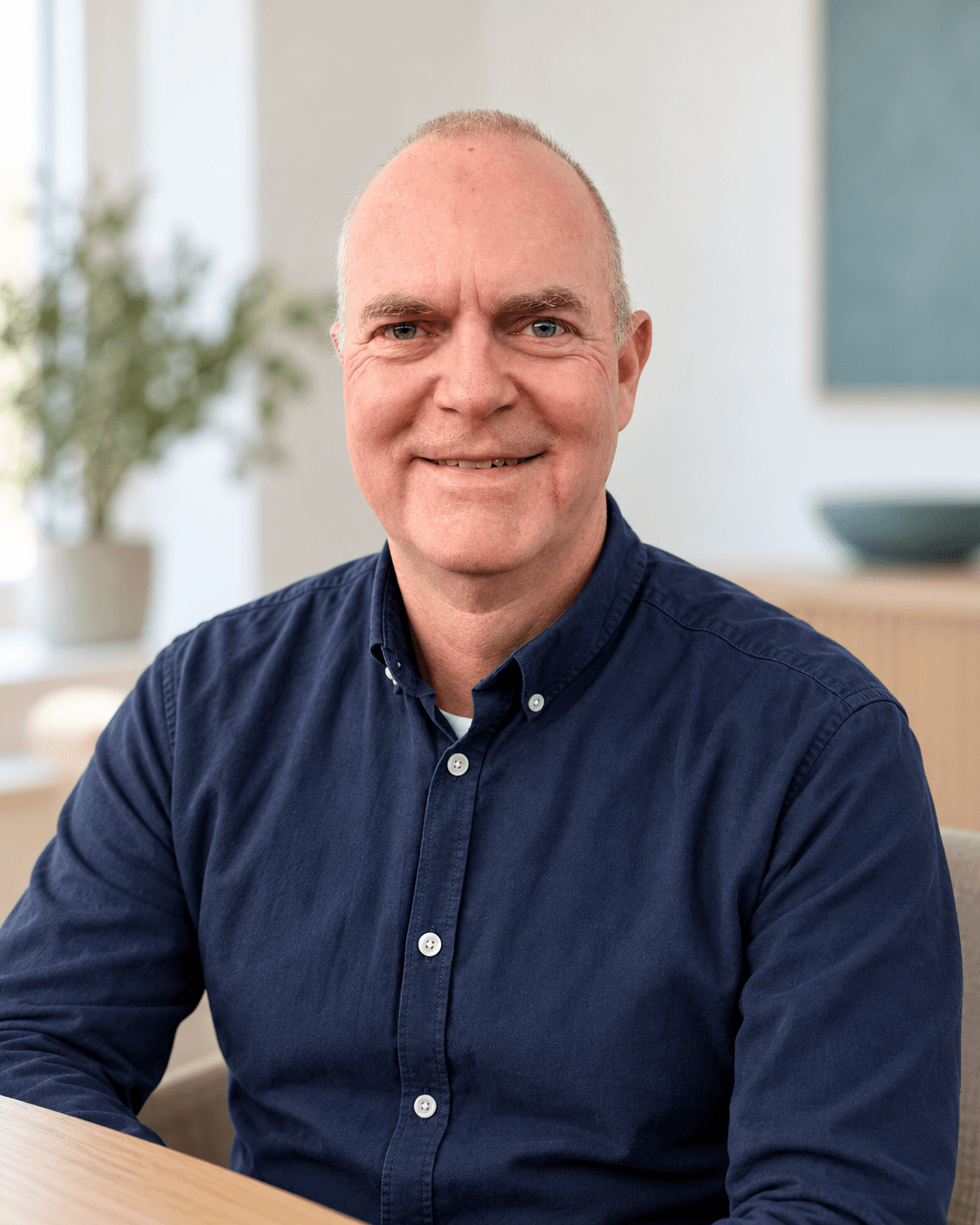
Your advisor
“My whole career has been about complex systems — designing them, troubleshooting them and making them fit together.
Today I do the same with the most complex system I know: the body.”
One piece at a time. One email when there's something worth your time. Evidence over hype — unsubscribe any time.